Dozen Bangladeshi infiltrators sent to new holding centres in Bengal
A dozen Bangladeshi nationals were sent to two newly set up holding centres in West Bengal till Monday allegedly for entering the country without valid documents.
“ I am Indian.” These were the last words of Anjel Chakma, an MBA student from Tripura and the son of a BSF head constable, as he was bullied with xenophobic slurs before being fatally stabbed by six youngsters in Dehradun.




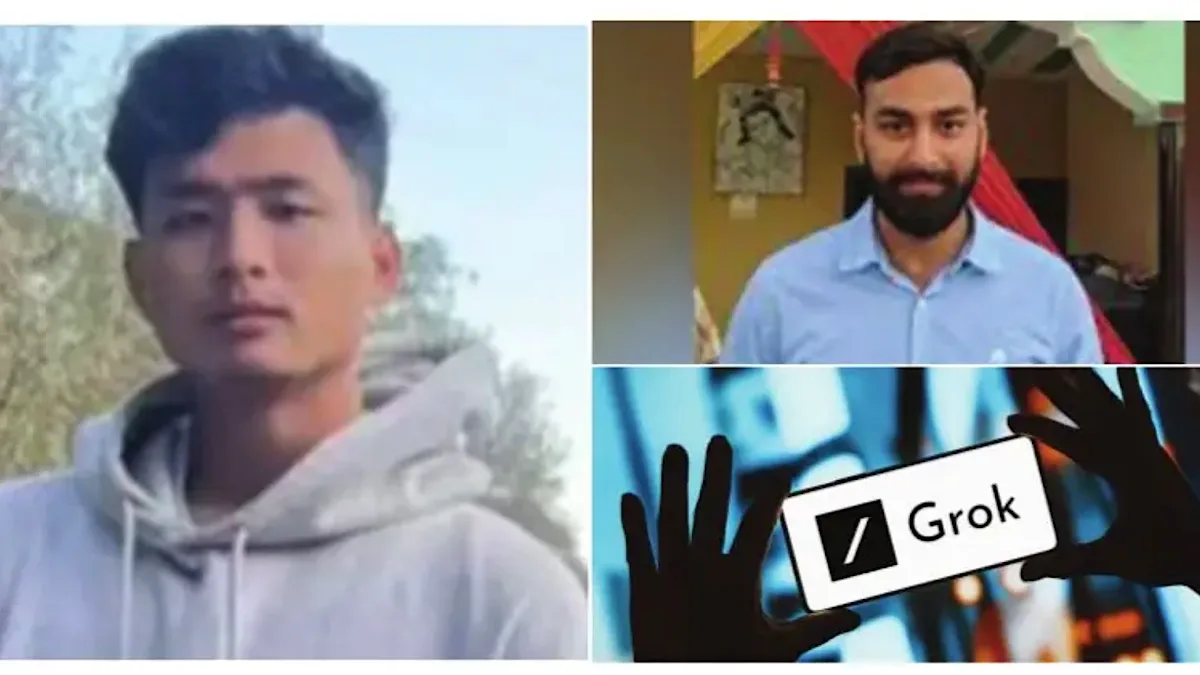
Photo:SNS
“ I am Indian.” These were the last words of Anjel Chakma, an MBA student from Tripura and the son of a BSF head constable, as he was bullied with xenophobic slurs before being fatally stabbed by six youngsters in Dehradun. Tragically, this violence is not confined to our borders. Vivek Saini, another MBA student, was brutally murdered at a gas station in Georgia, United States, in 2024. His family and community activists allege that the extreme brutality ~ he was struck nearly 50 times with a hammer ~ indicates a hate crime born of extreme intolerance.
These two tragedies ~ one internal, one external ~ are not isolated incidents. They are the grim outcomes of a low-cost, high-frequency digital campaign of hate. Social media platforms have become unregulated laboratories where vulnerable populations are bombarded with repetitive, divisive messaging. Whether it is the internal alienation of Northeast Indians or the global vilification of Indian immigrants, the mechanism is the same: algorithms that prioritize clicks over truth are radicalizing populations and threatening national security. The strategy is to flood with “othering” content ~ memes, distorted videos, half-truths ~ and a section of the population, virtually trained for violence, emerges. Except non-profits like Signal, the social media industry is notorious for its focus on profits and sees monitoring as a burden.
Advertisement
Its automated moderation systems may catch standard English profanity but often miss localized, coded slurs in regional languages. Compounding this failure is the blanket application of “End-to-End Encryption” (E2EE), which functions as a ‘golden lock on toxicity.’ Artificial intelligence poured fuel on the fire. The Center for the Study of Organized Hate’s (CSOH) 2025 report reveals the use of AI to flood social media with “synthetic hate.” Generative AI is now being used to mass-produce realistic images, contributing to the “aestheticization of violence,” where soft, cartoonish art styles make brutal messages look palatable to younger audiences. Grok’s image generation (via Aurora) faced global backlash in early 2026 by creating non-consensual sexualized images – digitally “undressing” women, celebrities, and minors into bikinis or revealing outfits, and spreading harmful content on X, with probes from the EU, UK, France, Malaysia, and Australia.
Advertisement
Responding to the Indian IT Ministry’s notice, on January 11, X blocked over 3,500 posts, permanently deleted over 600 accounts, and assured compliance with Indian laws. The strategic myopia of this hatred creates failure on two fronts. Internally, it destabilizes the nation by alienating the borderlands. When youth in the so-called “mainland” are conditioned to view Northeast Indians as outsiders, every xenophobic slur becomes a gift to hostile agencies. Externally, these same mechanisms are weaponized against Indians globally. In the US, extremist influencers are portraying Indian tech workers and H-1B holders as participants in an “occupational invasion.”
CSOH reports that nearly 70 per cent of anti-Indian discriminatory posts on platform X revolved around deportation narratives, collectively garnering over 111 million views in just three months. Across jurisdictions, courts are increasingly recognising this shift. Social Media Victim Response litigation in California (Multidistrict Litigation 3047) now marks a turning point by treating social media platforms as defective products. Petitioners – thousands of families and school districts – have argued that immunity under Section 230 of the U.S. Communications Decency Act, 1996 – often described as the “twenty-six words that created the internet” and mirrored by Section 79 of the Indian Information Technology (IT) Act, 2000 ~ should not extend to negligent platform design.
The Kids Online Safety Act also seeks to impose a statutory “duty of care”, requiring platforms to proactively disable addictive features such as infinite scroll for minors. The Brazilian Supreme Court, in 2024, ordered a nationwide suspension of X and froze its assets after the platform initially refused to suspend accounts engaged in hate speech. The Court of Justice of the European Union (CJEU), in Eva Glawischnig-Piesczek v. Facebook Ireland Limited, ruled that national courts can order platforms to remove illegal content worldwide. The Germany People’s Social Media Tribunal, in 2025, delivered a symbolic verdict by holding that platforms have knowingly prioritized algorithmic engagement over human life, directly fuelling atrocities like the Rohingya genocide. In Kenya, a high-profile case has been filed against Meta, alleging that its failure to moderate content in local languages such as Amharic and Oromo fuelled ethnic violence.
UNESCO Guidelines for the Governance of Digital Platforms recommend a “Human-in-the-Loop” (HITL) model, where platforms employ human moderators who speak local languages to validate automated flags. In addition, the ‘wisdom of the crowd’ may be involved by adopting a collaborative verification model, successfully used by Wikipedia’s rigorous peer-review standards. Platforms must voluntarily set high standards, work with governments on fair rules, and be held accountable. There is a need to find a “Golden Mean” that respects both individual liberty and public safety. Privacy is a crucial right, but it cannot be a cloak for criminality. While voice and video calls can remain encrypted, text and media broadcasting should be subject to moderation and traceability when legally required. The global consensus on absolute encryption is evolving.
The UK’s Online Safety Act gives the regulator, Ofcom, the power to order platforms to use “accredited technology” to scan for Child Sexual Abuse Material (CSAM) and terrorism. Since encryption cannot be broken without breaking privacy, the proposed solution is Client-Side Scanning (CSS) ~ software on the user’s phone that “sees” the message before it is encrypted. Similarly, the EU is debating “Chat Control” regulation that would mandate providers to scan all private communications to detect illegal material, effectively ending the era of absolute E2EE. Section 79 of the IT Act, interpreted through the lens of the Shreya Singhal judgment, requires platforms to act primarily upon ‘knowledge’ of harmful content through government or court orders, creating a ‘perverse incentive’ for ignorance. Platforms are legally advised against proactive monitoring, fearing that could reclassify the platform as an ‘editor’ with liability.
India must urgently incorporate a ‘Good Samaritan’ protection clause similar to Article 6 of the EU’s Digital Services Act (DSA), which protects platforms from liability even when they voluntarily remove harmful content. DSA also mandates algorithmic audits and fines of up to 6 per cent of global revenue. This legal clarity allows platforms to act as digital first responders rather than silent bystanders to hate. Further, the IT (Intermediary Guidelines and Digital Media Ethics Code) Rules, 2021 mandate proactive, automated scanning only for sexual violence and child abuse. The proactive mandate in Rule 4(4) needs to be expanded. Significant Social Media Intermediaries must be legally required to deploy automated tools to proactively identify content that is “insulting or harassing on the basis of gender, or promotes enmity between different groups with the intent to incite violence.”
If a platform has the technology to proactively stop child abuse, it has the moral obligation to use that same technology to stop the spark of a communal clash. Social media is a vital tool that has democratized information, and connected millions. However, today it operates like a busy intersection with no traffic lights, leading to crashes such as bullying, and social unrest. Because these platforms have the power to impact millions instantly, giving them no rules is as dangerous as putting nuclear weapons in the hands of private companies. In the long run, Indians must prioritize digital sovereignty by migrating to indigenous platforms where data servers reside on Indian soil. National security cannot be outsourced to foreign algorithms.
(The writer is a transparency and equality advocate and author, and founder-member of the 51ABI Foundation)
Advertisement